
DIY vs Professional Auto Repair: Real Cost Comparison
Last Updated: November 20, 2026
Quick Summary
DIY auto repair saves money on simple jobs like brake pads, but the savings shrink once tools, parts, mistakes, and your time are counted. Professional shops charge more upfront, yet they diagnose accurately and back their work with a warranty. Compare a shop's itemized estimate against a full DIY cost, including amortized tools, before deciding on any auto repair cost.
Brake pad replacement can look like an easy win but needs a jack or ramps and a torque wrench.
A first-time job often takes two or three times longer than an experienced technician needs.
Airbag, steering, suspension, and frame damage repairs should go to a professional.
Ask the shop to itemize diagnostic, parts, labor, and disposal fees before comparing totals.
Our shop offers a 100% lifetime workmanship warranty on the work we perform.
Is DIY really cheaper for your repair?
Innovation Auto Body Mechanics & Tires gives honest, transparent estimates for collision and mechanical work.
Table of Contents
When your car needs a repair, the first question is usually whether to fix it yourself or pay a shop to handle it. The DIY vs professional auto repair cost comparison looks simple on paper, but the real numbers depend on the job, your skill level, and what can go wrong. This guide is designed to help you weigh those costs honestly, so you can decide with confidence.
Most people expect DIY to be the cheaper option, and for some jobs it is. For others, the savings disappear once you add tools, parts, and a few wasted weekends. A professional shop carries overhead, labor rates, and diagnostic equipment, but it also brings experience and a warranty on the work.

Car Repairs You Can Do Yourself Without Losing Money
Some repairs are genuinely worth doing at home.
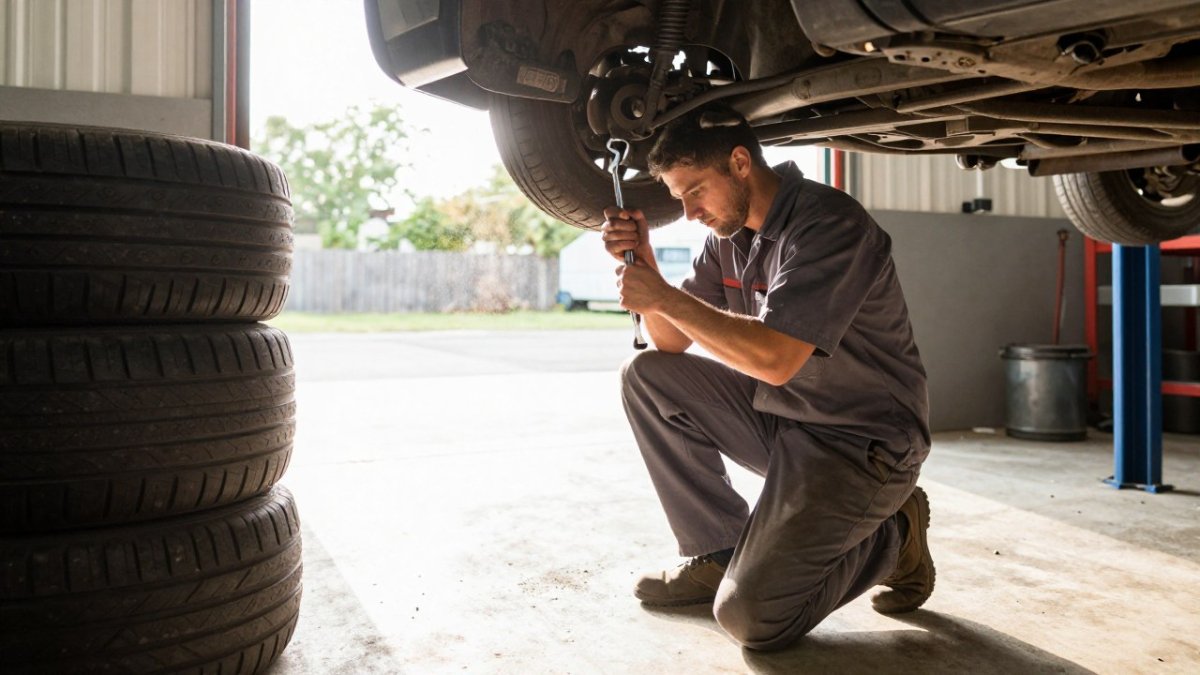
The savings shrink quickly as jobs get more involved. Brake pad replacement, for example, can look like an easy win, but it requires a jack or ramps, a torque wrench, and careful attention to the caliper and rotor. A mistake there is far more expensive than the original repair.
Parts, Tools, and Time Investment for Beginner Jobs
Before you start, total up the full cost. Parts are only part of the picture. A basic socket set, a torque wrench, and jack stands can cost more than a single professional labor charge, so buy them only if you will use them again.
Time matters too. A first-time job often takes two or three times longer than an experienced technician needs. If your weekend disappears into one repair, the hours you lost may outweigh the money you saved.
Car Repairs to Leave to Professionals
Some repairs carry enough risk that a professional is the better choice. Airbag work, steering and suspension components, and any job that involves structural or frame damage fall into this group. Errors here can affect how your vehicle performs in a crash.
Collision-related work is the clearest example. To learn how frame damage shows up after an accident, see warning signs of frame damage. Restoring factory safety standards after an accident requires precise measurement and specialized equipment. Our shop uses computerized measuring and I-CAR and ASE certified technicians for this reason. For a closer look at how professional repair compares to DIY on safety and durability, see professional approach for windshield damage.
Safety Risks, Diagnostics, and Warranty Considerations
Diagnostics are where DIY often fails. A check-engine light can point to dozens of causes, and reading a code with an inexpensive scanner does not tell you which part to replace. Guessing wrong means paying for unnecessary parts and still having the original problem.
Warranty coverage is another factor. Work done by a professional often comes with a guarantee, while a DIY repair that fails leaves you to pay again. Our shop offers a 100% lifetime workmanship warranty on the work we perform.
The Hidden Costs of DIY Car Repair
The sticker price of parts rarely tells the full story. DIY repairs carry costs that don't appear on a receipt. Tools bought for one job sit unused afterward. Mistakes can damage nearby components, turning a small fix into a larger bill.
Rework is the most common hidden cost. When a DIY repair fails, you may need a professional to fix both the original problem and the damage caused by the first attempt.
Time has a cost as well. If you value your hours at work or with family, a long repair session can be more expensive than paying a shop to finish the job faster.
How to Compare a Mechanic Repair Estimate Against Your DIY Numbers
A shop estimate and a DIY parts list are not the same kind of document, so comparing the bottom-line numbers directly is misleading. The professional figure bundles labor, parts markup, diagnostic time, disposal fees, and warranty into one number. Your DIY figure is usually just the parts receipt.
Start by asking the shop to itemize the estimate.
Next, build your DIY column with the same categories, not just the parts price. Include the parts you will actually buy, any tools you do not already own, fluids and consumables, and the value of your time.
The tool line is where the comparison flips. Tools are a one-time cost that gets amortized across every future job, so a $150 torque wrench used on four repairs effectively costs about $38 per job.
Finally, price the risk. Ask the shop whether the estimate includes diagnosis, whether the parts carry a warranty, and whether the labor is guaranteed. A low estimate with no warranty can cost more over time if the repair fails and you pay twice.
Watch out: A shop estimate that omits the diagnostic charge or disposal fee is not comparable to a DIY parts receipt, so ask for those line items before you compare totals. For a realistic reference point on bumper work, see bumper repair cost estimates.
The article breaks down how a shop estimate and a DIY column should be built so they can be compared fairly.
Estimate line | What it includes | Watch for |
Diagnostic charge | Inspection or diagnosis time | Often missing from low quotes |
Parts | Part numbers and parts markup | Confirm the exact part listed |
Labor | Hours times the shop's labor rate | Dealer rates are often higher |
Fees | Disposal, shop supplies, environmental | Ask for each as a line item |
Tools (DIY) | One-time cost spread over future jobs | Amortize a $150 wrench across uses |
Your time (DIY) | Hours spent, including trips and cleanup | Price it at what your hours are worth |
A Decision Framework for Choosing DIY or a Professional Shop
Most guides give you a list of questions and leave you to guess. If you have already decided to hire a professional, how to choose a collision repair shop near you explains how to compare options.
The four factors are skill, tools, time, and consequence. Skill means whether you have done this job or a close cousin before and can diagnose the fault, not just swap a part. Tools means whether you already own the required tools or would have to buy or rent them. Time means the realistic hours the job will take you, including trips for parts and cleanup, weighed against what those hours are worth to you. Consequence means what happens if you get it wrong, a failed wiper blade is an inconvenience, while a failed brake job or an airbag mistake is a safety event.
Score each factor 1 to 5, where 5 means strongly favors DIY and 1 means strongly favors a shop. A total of 16 to 20 points generally supports DIY. A total of 11 to 15 is a judgment call where a professional diagnosis is often the tiebreaker. A total of 10 or below points to a shop. The framework is deliberately simple so you will actually use it, but it forces you to price the two things people skip: your time and the cost of failure.
Use repair tiers to set a ceiling before you score. Routine maintenance such as air filters, wiper blades, batteries, and cabin filters is almost always safe to score toward DIY. Intermediate jobs such as brake pads, spark plugs, and fluid changes can go either way depending on your tools and experience.
Diagnosis deserves its own line in the framework. A check-engine light can have dozens of causes, and an inexpensive code reader tells you the circuit, not the failed part. If you cannot confirm the fault with confidence, pay for a diagnosis first and then decide whether to do the repair yourself.
Finally, weigh warranty and liability. Professional work usually carries a workmanship guarantee, and our shop backs its work with a 100% lifetime workmanship warranty. DIY work carries no such protection, and a failed repair can affect related parts warranties or complicate an insurance claim if the damage is traced to the work.
Run the score, check the tier ceiling, and confirm the diagnosis. If the framework points to a shop, get an itemized estimate and compare it against your DIY column using the method above. If it points to DIY, buy the right tools once and amortize them across future jobs.
Watch out: Scoring a safety-system repair toward DIY because the parts are cheap ignores the consequence factor, and a failed brake or airbag repair can cost far more than the labor you avoided.
Get a Free Estimate Before You Commit to a Repair
Before you decide, get an accurate picture of what your repair will cost. Innovation Auto Body Mechanics & Tires offers a free estimate, so you can compare it against your own numbers. Our family-owned team has been serving the community since 2009.
Watch out: Skipping the diagnosis to save money often leads to paying for the wrong parts. Get the problem confirmed before buying anything.
Contact Innovation Auto Body Mechanics & Tires today to request your free estimate and find out whether a professional repair makes sense for your vehicle. You can also review our professional collision repair guide to see what to expect before you call.
Frequently Asked Questions
Is DIY car repair worth it?
DIY car repair is worth it for simple jobs such as replacing air filters, wiper blades, batteries and brake pads on vehicles with easy access. Savings come mainly from skipping shop labor, which is billed at an hourly rate that often runs well above what parts cost. The savings disappear quickly if a mistake requires a second repair, so compare the full cost of parts, tools and possible rework before deciding. For jobs involving engine internals, transmissions, airbags or steering systems, the risk usually outweighs the savings.
Which car repairs are worth doing yourself?
Repairs with low risk, limited tooling needs and clear instructions are the best candidates for DIY. Common examples include changing engine oil and filters, replacing cabin and engine air filters, swapping wiper blades, replacing a 12-volt battery and changing brake pads on a vehicle where you have the right tools. Before starting, confirm the part fits your exact vehicle, check whether a specialty tool is required, and estimate the total hours involved to make sure the savings justify the effort.
What hidden costs should you include when comparing DIY and professional repairs?
A fair comparison goes beyond the price of parts. Add the cost of tools you do not already own, disposal fees for oil and coolant, the value of your time, and the cost of a second visit to a shop if the repair fails. Also account for any damage a mistake could cause to nearby components, and for lost use of the vehicle while the work is underway. A repair that saves $150 in labor can easily cost more than that once a wrong part or a stripped bolt is factored in.
How do you compare a DIY repair estimate with a mechanic's quote?
Start by listing every line item on the mechanic's quote, including parts, labor hours, diagnostic fees and shop supplies. Then build your own estimate with the same categories, pricing each part from a current retail source and adding the tools you would need to buy or rent. Make sure both estimates use the same part quality and warranty terms, since a cheaper part may not last as long. Ask the shop whether the diagnostic fee is credited toward the repair if you approve the work. This side-by-side approach shows whether the savings are real or only apparent.
Comments