
How to Negotiate Auto Repair Costs Without Overpaying
Last Updated: November 4, 2026
Quick Summary
To negotiate auto repair costs, start by getting a written, itemized estimate, then compare quotes from two or three shops for the same job with the same parts. Audit each line for labor hours, duplicate charges, parts prices and fees, and ask about each one before you approve the work.
Get every estimate in writing before approving any work, since verbal quotes change once the car is on the lift.
Ask the shop which flat-rate labor guide it uses and compare its listed hours to your estimate.
Ask whether the diagnostic fee is credited toward the repair if you proceed.
Sort recommended repairs into safety-critical, soon, and deferrable so you know what has room to negotiate.
Ask what warranty comes with a cheaper parts option before accepting it.
Table of Contents
Auto repair bills are rarely fixed in stone. Most shops expect some back-and-forth, and a car owner who learns how to negotiate auto repair can often lower the total without sacrificing quality.
Negotiating does not mean haggling over the shop's honesty. It means understanding what you are paying for and where the number can move.
Why Auto Repair Estimates Are Open to Negotiation
Many repair estimates include room for adjustment. Labor rates, parts choices, and optional services can all change the final price. A shop wants the work, and a customer who knows what to ask often gets a more accurate bill.
Labor is usually billed as hours multiplied by an hourly rate
Parts can come in several grades, with different prices
Some line items are optional or can be deferred
Step 1: Get a Detailed, Itemized Written Quote
Ask for a written estimate that lists every part, labor hour, and fee.

A car owner at a service counter reviewing a printed itemized repair estimate with a service advisor beside them in a clean repair shop.
Watch out: verbal quotes change once the car is on the lift. Get the estimate in writing before you approve any work.
How to Compare Mechanic Quotes Side by Side
Getting two or three quotes is one of the simplest ways to learn a fair price. Ask each shop to quote the same job with the same parts. Otherwise, the numbers will not line up.
NerdWallet
Quote Item | Shop A | Shop B | Shop C |
Labor hours | 3.0 | 2.5 | 3.2 |
Labor rate | Ask for it | Ask for it | Ask for it |
Parts type | OEM | Aftermarket | Remanufactured |
Diagnostic fee | Ask if waived | Ask if waived | Ask if waived |
Keep your comparison simple. Note each shop's labor hours, parts type, and fees, then ask the highest-priced shop why its number is higher.
Step 2: Audit the Estimate Line by Line
Treat the estimate like an invoice you are auditing, because that is what it is: a claim on your money that the shop will expect you to approve. Work through it in this order.
Confirm the vehicle and the complaint
Check that the year, make, model, engine, and VIN on the estimate match your car. A wrong VIN or engine code can pull the wrong labor time and the wrong part. Then confirm the stated complaint matches what you actually asked for. If you asked about a noise and the estimate includes a transmission service, ask why before you read another line.
Audit labor hours against a flat-rate guide
Labor is usually the largest line, and it is the one most often taken on faith. Most shops price labor from a flat-rate labor guide, a published time for a specific operation on a specific vehicle, not the clock time a technician spends.
If the estimate shows more hours than the guide lists, ask why. Legitimate reasons exist (seized bolts, rust, additional diagnosis), but they should be explained, not assumed.
If the estimate shows hours for an operation that is already included in another line, that is a duplicate. Overlap is common on bundled jobs, for example, charging labor to replace a water pump and again to replace the timing belt that has to come off anyway.
Ask for the hourly labor rate in dollars, and confirm whether it is the same rate for every line. Some shops use a higher rate for diagnostic or specialty work.
A common pattern is for a shop to quote "book time" on a job that routinely finishes faster, which is not improper, flat-rate pricing is standard, but it does mean the hours are a starting point for discussion, not a fixed law of physics.
Benchmark parts prices, not just parts types
You already know OEM, aftermarket, and remanufactured differ in price. The audit step is to put a number on each option.
Watch out: a low parts price can hide a shorter warranty or a part that does not meet the manufacturer's specification for your vehicle, ask what warranty attaches to the cheaper part before you accept it.
Scrutinize diagnostic fees and shop supplies
Diagnostic fees are frequently negotiable, especially if you approve the repair the diagnosis points to. Ask directly whether the diagnostic fee is credited toward the repair if you proceed. Shop supplies and environmental fees are usually small, but they should be a stated percentage or a flat amount, not a vague round number. Ask what the fee covers and whether it is capped.
Check for duplicates, taxes, and math errors
Read the line items against each other, not just one at a time. Look for the same part listed twice, a fluid charged on a line that already includes fluid, or a labor operation that overlaps another. Then check the tax line: ask the shop to confirm which taxes apply to your invoice. Finally, add the lines yourself.
Put your findings in writing before you talk price
Before you negotiate, mark up the estimate: circle the lines you question, note the flat-rate time you found, and write down the parts alternative you want priced. Walking in with three specific, documented questions is far more effective than asking for a general discount, because it moves the conversation from "can you come down" to "can you explain this line."
How to Negotiate With an Auto Body Shop
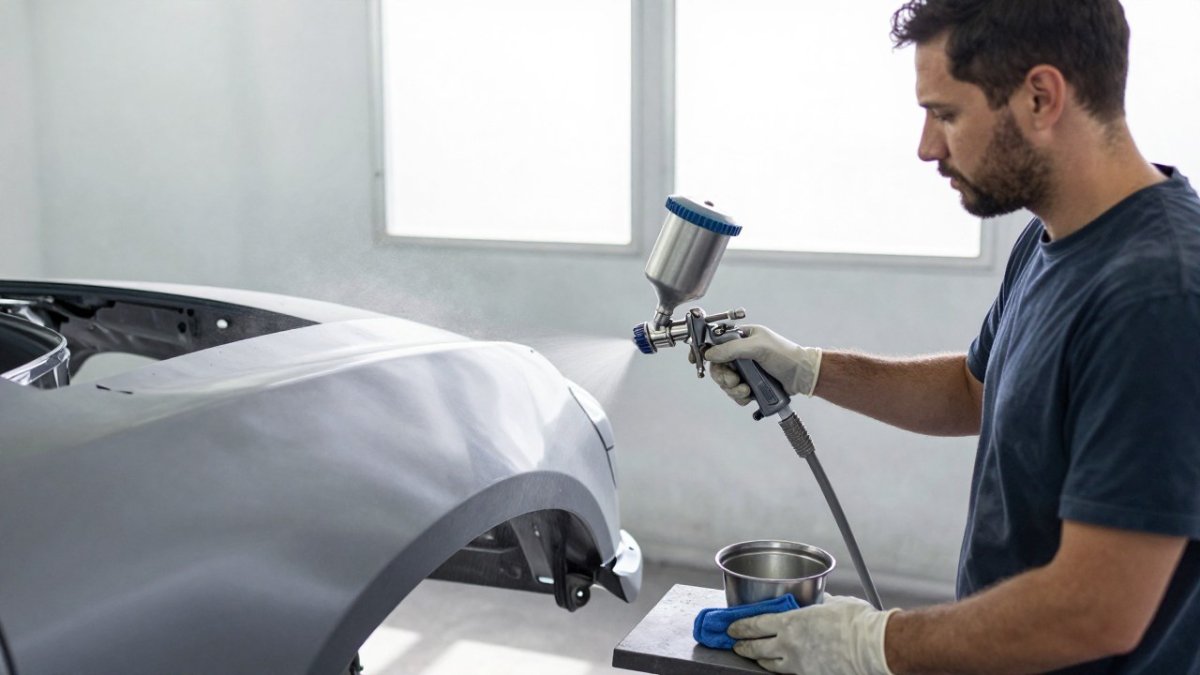
Body shop estimates often include paint, labor, and materials that can be reviewed closely. Ask how the labor hours were calculated for dent removal, panel replacement, and paint.
If your insurer has a preferred shop network, ask what that means for your choice. You may have more options than you think. For background on how these networks work, see NAIC consumer guide to auto insurance claims.
Can You Negotiate Car Repairs at a Dealership?
Yes, you can often negotiate at a dealership too. Dealership service departments may have less flexibility on parts prices, but labor hours, optional services, and fees can still be discussed.
Pricing differs between dealerships and independent shops. Getting a quote from both types of shops gives you a fair benchmark, so you know what a reasonable price looks like in your area.
Scripts, Realistic Outcomes, and Triage: Prioritizing What to Approve Now
This is where most guides get vague. Negotiation is a conversation with a sequence, and triage is a decision about safety. Handle both deliberately.
Triage first: separate safety-critical work from deferrable work
Before you negotiate a dollar, decide what actually has to happen now. Ask the shop to sort every recommended repair into three buckets and to write the sort on the estimate:
Safety-critical, do now. Brakes below specification, steering and suspension play, tires at or near the wear indicator, cracked brake lines, failed lights, and anything the shop says makes the car unsafe to drive. Do not postpone these to win a negotiation; the savings are not worth the risk.
Mechanically urgent, do soon. Work that will cause damage if ignored, such as a failing water pump, a leaking gasket, or a battery at the end of its life. These can sometimes be sequenced over a few weeks.
Deferrable, can wait. Cosmetic bodywork, non-critical sensors, scheduled maintenance that is not yet due, and comfort items. These are your negotiating room.
Ask the advisor to mark the buckets on the estimate and to note anything that would make the car unsafe if deferred. A shop that will not distinguish safety-critical work from optional work is a reason to get a second opinion.
Scripts you can actually use
Adapt the wording to your own voice, but keep the structure: ask, then listen, then counter.
Opening the audit: "Before I approve this, can you walk me through each line, the labor hours, the parts, and the fees?"
Labor: "The labor guide shows [X] hours for this job. Your estimate shows [Y]. Can you explain the difference?"
Parts: "Is there a lower-cost parts option that still meets the manufacturer's specification, and what does each option do to the warranty?"
What realistic outcomes look like
Expect small, specific concessions more often than large ones. Asking for a percentage off the whole bill with no justification rarely works and can sour the conversation.
If a shop will not move on price, ask what it will include instead: a courtesy inspection, a fluid top-off, or a written warranty extension. Value can move even when the number does not.
Know your authorization rights before the bill arrives
A written estimate is the baseline. A shop generally may not exceed the authorized estimate without your approval, and rules vary by state. Ask the shop what its policy is and get any additional work approved in writing, by text or email if that is how the shop communicates.
Ask for your old parts back, which is useful if you later question whether a part was actually replaced.
Payment, financing, and warranty angles
If the total is more than you can pay at once, ask about the shop's payment options before you negotiate the price, a payment plan can matter more than a small discount. Compare any repair financing to a credit card or a personal loan on the same amount: check the interest rate, the fees, and whether the plan is a promotional rate that jumps later.
Your Next Step: Request a Free Estimate and Review It Together
Bring your vehicle information and any earlier quotes to Innovation Auto Body Mechanics & Tires. Our team will review the work with you, explain each charge, and show you the parts options. Request a free estimate, and we will go through the numbers together before you approve anything.
Frequently Asked Questions
What is the $3,000 rule for car repairs?
The $3,000 rule is a common rule of thumb: if a repair costs more than $3,000, or roughly half the value of the vehicle, it may be more sensible to stop investing in the car and consider replacing it. It is not a legal standard and does not apply to every situation. Before applying it, compare the repair cost with the car's current market value, its remaining reliability, and the cost of a replacement. Pricing for any specific repair depends on the vehicle, the parts used, and the shop's labor rate, so request an itemized written estimate before deciding.
Can you haggle the price at a mechanic?
Yes, you can ask a mechanic or shop to review the price, though outcomes vary. Start by asking for a line-by-line breakdown of labor hours, parts, shop fees, and taxes. Ask whether less expensive parts, such as remanufactured or aftermarket options, are appropriate for your vehicle. You can also ask whether any labor can be combined into one visit or whether a diagnostic fee is waived if you approve the repair. Politely mention that you are comparing estimates. Many shops will explain their pricing, even if they cannot change it much.
What should you ask a mechanic before approving repairs?
Ask what is broken, how the shop confirmed the problem, and whether the repair is urgent, safety-related, or can wait. Request a written, itemized estimate that lists each part, labor hours, labor rate, and any diagnostic or shop fees. Ask which parts are OEM, aftermarket, or remanufactured, and what warranty covers each part and the labor. Ask what happens if the problem returns. Approve only the specific work you understand, and ask for the old parts back if you want to verify the replacement.
How can you compare auto repair estimates fairly?
Compare estimates for the same job, using the same parts type and the same scope of work. Ask each shop for an itemized quote that lists parts, labor hours, labor rate, and fees. Check whether one estimate includes extra items, such as a fluid flush or inspection, that another leaves out. Compare the total after taxes and fees, not just the parts or labor line. If two estimates differ sharply, ask each shop to explain its diagnosis. Getting at least two or three estimates gives you a realistic market range for the repair.

Comments