.png)
Frame Straightening After Accident Damage
- 2 days ago
- 6 min read

A car can look mostly fine after a collision and still have serious structural damage underneath. That is why frame straightening after accident damage is never just a cosmetic repair. If the vehicle’s structure is out of specification, everything from alignment and steering feel to airbag timing and tire wear can be affected.
For drivers in Temple Hills and across the DC area, this matters for one simple reason: you need your vehicle repaired to factory standards, not just made to look repaired. Structural work has to be measured, corrected, and verified with precision. Anything less leaves too much to chance.
What frame straightening after accident damage actually means
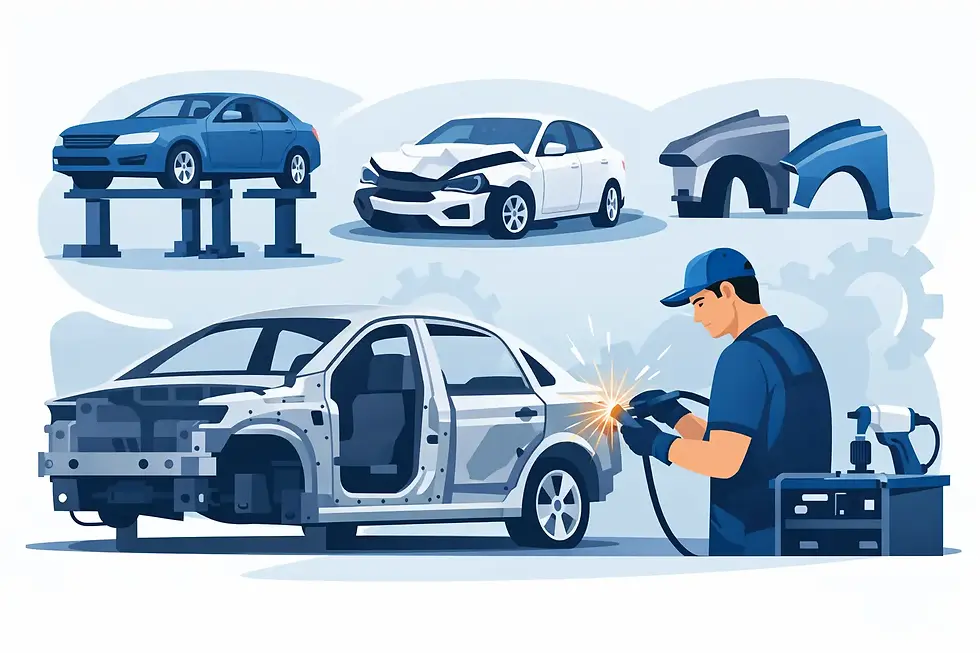
Frame straightening is the process of restoring a vehicle’s structural components to their original dimensions after a collision. On older body-on-frame vehicles, that may involve correcting the frame itself. On many modern passenger vehicles, the work often centers on unibody structural sections, including rails, pillars, aprons, floor sections, and other load-bearing areas.
The goal is not to "pull it until it looks better." The goal is to bring the structure back within manufacturer tolerances so the vehicle can perform as designed in normal driving and in another impact. That requires accurate measuring equipment, a dedicated frame machine or structural repair setup, and technicians who understand OEM repair procedures.
A proper repair starts with identifying where the damage traveled. Impact energy rarely stays in one visible spot. A hit to the front corner can shift suspension geometry, move structural rails, distort mounting points, and create alignment issues that show up long after the body panels are replaced.
Signs your vehicle may need structural correction
Some vehicles show obvious signs of frame damage. Others do not. A bent hood gap or a door that no longer closes cleanly can point to a structural issue, but so can less dramatic symptoms.
If the steering wheel sits off-center, the car pulls after alignment, tires begin wearing unevenly, or body lines no longer match from side to side, there may be more going on than surface damage. You may also notice vibration, a changed ride height, or trouble with trunk, hatch, or door fitment. These are not details to ignore. They often point to underlying measurements that are no longer where the manufacturer intended them to be.
That said, it depends on the severity and location of the collision. Not every accident results in structural damage, and not every misalignment means the frame is bent. Suspension parts, subframes, and steering components can also shift or fail. A disciplined inspection is what separates a guess from a correct repair plan.
Why precision matters more than appearance
After a crash, many drivers understandably focus first on what they can see - the bumper, fender, hood, or quarter panel. Structural damage works differently. It affects how the vehicle tracks on the road, how panels fit together, and how crash energy would be managed in a future collision.
When a structure is out of spec, other systems can no longer do their jobs the way they were engineered to. Alignment may not hold. Advanced driver-assistance systems may require recalibration after structural and suspension repairs. Steering and braking response can change. Even if the paint looks perfect, the repair is not done right if the structure underneath is still compromised.
That is why certified repair facilities rely on measurement data before, during, and after straightening. The work is based on numbers, not assumptions.
How frame straightening after accident repair is performed
The process usually begins with a full damage assessment and structural measurement. Technicians inspect visible and hidden damage, document affected areas, and compare the vehicle’s current dimensions against factory reference points. This step matters because the visible hit point is not always the true extent of the damage.
Once the vehicle is secured on a frame machine or structural bench, technicians use controlled pulling methods to move damaged sections back toward specification. This is not brute force. It is a measured correction process that uses the right angle, sequence, and amount of pull to address the way the metal moved during impact.
In some cases, straightening alone is not the full solution. Certain structural components are designed to be replaced rather than repaired, especially when the metal has buckled beyond acceptable limits or the manufacturer prohibits straightening in that area. High-strength steel and other advanced materials can have strict repair limitations. That is where OEM procedures become critical.
After structural correction, technicians re-measure the vehicle, inspect related systems, and continue with necessary repairs such as suspension work, panel replacement, wheel alignment, and refinishing. Depending on the damage, post-repair scanning and calibration may also be required.
Repair or replace? The answer depends on the damage
One of the most common questions is whether a bent frame can actually be repaired. Sometimes yes. Sometimes no.
A repair is appropriate when the damaged area can be safely restored within manufacturer tolerances using approved methods. Replacement is often the better path when the damage is too severe, the material has been overstressed, or the OEM procedure requires sectioning or complete component replacement. There is no honest one-size-fits-all answer.
This is where experience matters. A shop focused on proper structural repair will not promise the fastest or cheapest answer before measuring the vehicle. It will explain what was damaged, what can be corrected, what must be replaced, and why that decision protects long-term safety and drivability.
Insurance and structural repairs
Structural damage often involves insurance, and that adds another layer of stress for vehicle owners. Estimates, supplements, teardown findings, and repair approvals can quickly become confusing if the process is not clearly managed.
A professional collision repair shop should document structural findings thoroughly and communicate with the insurer as the repair plan develops. That matters because hidden damage is common in frame and unibody repairs. What appears to be a straightforward estimate at first can change once the vehicle is disassembled and measured.
For customers, transparency is key. You should understand whether the vehicle has structural damage, what repair method is being used, and how the final measurements confirm the repair was completed properly. Clear communication helps prevent surprises and keeps the repair focused on what the vehicle actually needs.
Why certified structural repair makes a difference
Frame work is not general repair work. It requires training, proper equipment, and an understanding of how modern vehicles are engineered. I-CAR and ASE credentials matter because they signal that the technicians performing the work are trained in current repair principles, measurement standards, and related system interactions.
That is especially important on late-model vehicles with advanced materials, integrated safety systems, and precise repair requirements. The margin for error is small. A repair that is "close enough" can create problems that show up in tire wear, alignment instability, panel fit, or future crash performance.
At a family-owned shop like Innovation Auto Body Mechanics & Tires, the value of certified repair is paired with something equally important: accountability. Customers are not just looking for technical skill. They want straight answers, respectful service, and confidence that the vehicle is being repaired with their safety in mind.
What to ask before approving the repair
If your vehicle needs structural work, ask how the damage is being measured, whether OEM procedures are being followed, and what additional systems may need inspection or calibration afterward. Ask whether the repair includes before-and-after structural verification and whether related alignment and suspension checks are part of the process.
Those questions are not being difficult. They are exactly the right questions. A reputable shop should be ready to answer them clearly.
You should also ask about workmanship coverage. Structural repair is too important to leave backed only by a verbal promise. A written warranty on qualifying work adds confidence that the shop stands behind the repair.
The real goal is confidence behind the wheel
The best frame repair is not the one that simply gets the car out of the shop. It is the one that restores the vehicle’s structure, supports proper alignment and safety system function, and lets you drive without second-guessing the repair.
After a collision, peace of mind comes from precision. When frame straightening is done with certified expertise, proper measurements, and factory-standard discipline, your vehicle has a real path back to safe, reliable service. If you have questions after an accident, trust a shop that treats structural repair like the safety issue it is - because it is.


Comments