.png)
How to Choose Car Paint Repair Near Me

A paint problem rarely stays cosmetic for long. What starts as a scrape on a bumper, a deep key mark on a door, or peeling clear coat on a hood can quickly turn into exposed metal, surface corrosion, and a vehicle that looks older than it is. When drivers search for car paint repair near me, they are usually not looking for a temporary touch-up. They want the damage corrected properly, the color matched accurately, and the repair done to a standard that protects the vehicle.
That distinction matters. Paint repair is one of the easiest services to underestimate because every shop can say it paints cars. The real difference is in preparation, materials, color match precision, and whether the repair process follows factory-minded standards instead of shortcut methods designed to save time.
What good car paint repair near me should actually include
A quality paint repair starts well before any color is sprayed. The damaged area has to be evaluated for more than surface appearance. A bumper scuff may only need refinishing, but a dented fender or scraped quarter panel may also involve filler work, panel reshaping, corrosion prevention, and blend planning so the repaired section does not stand out in daylight.
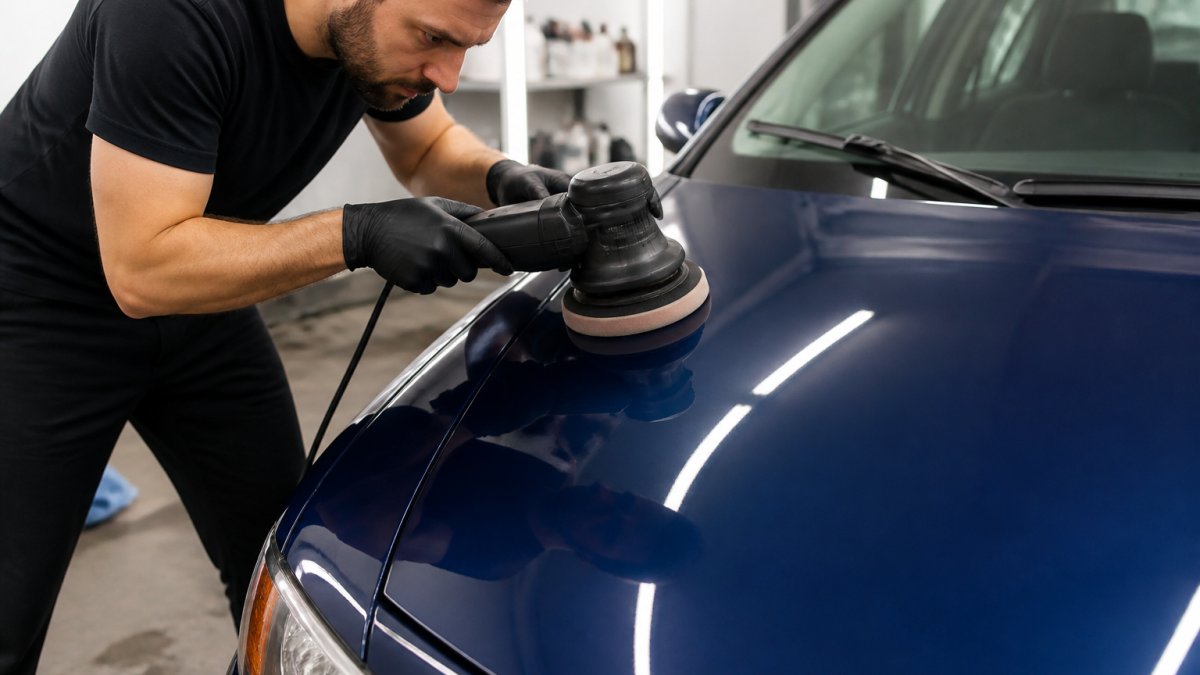
Proper prep is where serious shops separate themselves from quick cosmetic operators. The panel has to be cleaned, sanded, corrected, primed when needed, and blocked so the final surface lays flat. If that foundation is off, even premium paint materials will not hide it. You may see texture issues, edge mapping, gloss differences, or a repair line that becomes obvious within a few weeks.
Good paint repair also includes controlled color matching. Modern vehicles use complex finishes, including metallics, pearls, tinted clears, and tri-coat systems that can shift under different lighting. A paint code gets the technician close, but not all the way there. Experienced refinish teams rely on computerized color-match technology, spray-out testing, and blend techniques to make the repaired area visually consistent with adjacent panels.
Why cheap paint work often costs more later
Price matters, especially when damage was not part of the monthly plan. But paint repair is one of those services where the lowest estimate can become the most expensive option.
A bargain repair often skips critical steps. The shop may sand minimally, avoid removing trim, tape too close to the damage, or spray only the visibly affected spot without accounting for color transition. At first glance, the repair may seem acceptable. Then the mismatch shows up in sun, the clear coat begins to peel, or overspray appears on moldings and glass.
There is also the issue of durability. Lower-grade materials and rushed curing practices can leave the finish more vulnerable to fading, chipping, and premature failure. If the work has to be redone, the next repair may require stripping unstable layers and correcting defects that should never have been there in the first place.
For drivers in Temple Hills, Prince George's County, and the DC area, where vehicles face daily commuter wear, seasonal weather shifts, road debris, and tight parking conditions, durability is not a bonus. It is part of doing the job right.
How to judge a paint repair shop before you commit
The best shop for your vehicle is not always the closest one, and it is not always the one with the fastest promise. Start by looking at how the business talks about its process. Shops that emphasize certified technicians, repair planning, color-match systems, and workmanship warranties usually take refinishing more seriously than shops that speak only in general terms.
It is also worth asking whether the damage is purely cosmetic or tied to collision repair. That matters because paint damage can sometimes overlap with hidden issues. A cracked bumper cover, for example, might involve mounting damage underneath. A scraped side panel could include dent distortion that affects how the final finish reflects light. If the shop handles both body repair and paint refinishing under one roof, the process is usually more controlled and less fragmented.
Ask direct questions. Will the panel be blended if needed? Will trim or hardware be removed rather than masked around? Is there a warranty on workmanship? Can the shop explain how it handles color match on metallic or pearl finishes? Strong repair facilities answer these questions clearly because their process is built around them.
The difference between touch-up, spot repair, and full refinishing
Not every paint issue needs the same level of repair, and a trustworthy shop should tell you that. A small rock chip on the hood may respond well to localized correction or touch-up. A shallow bumper scrape may be a candidate for spot repair if the damage is isolated and the finish can be restored cleanly.
But there are times when partial work is the wrong call. If the damage is deep, the panel has dents, the clear coat is failing broadly, or the vehicle color is difficult to match in a confined area, full panel refinishing is often the better long-term option. It costs more upfront, but it usually delivers a cleaner visual result and better durability.
This is where honesty matters. A customer-protective shop does not automatically sell the biggest repair, but it also does not recommend a smaller repair that is likely to disappoint. Precision means matching the repair method to the condition of the panel and the expectations of the owner.
Insurance can matter even for paint-related damage
Some paint repairs are straightforward out-of-pocket jobs. Others are connected to collision claims, vandalism claims, or damage discovered after an accident estimate begins. If that is your situation, the repair shop's ability to work directly with insurance can make the experience much easier.
Insurance coordination is not just paperwork. It affects estimate accuracy, supplements, documentation, and whether all necessary repair steps are properly captured. If refinishing is tied to body work, calibration checks, structural repair, or parts replacement, a shop with collision repair experience is better positioned to protect both the quality of the repair and the integrity of the claim.
That is one reason many local drivers prefer a full-service facility rather than a paint-only operation. When body, paint, and post-collision systems are handled together, there is less room for gaps, delays, or conflicting diagnoses.
Certifications and equipment are not just marketing terms
Paint repair is part craftsmanship and part process control. A disciplined shop invests in both. I-CAR and ASE credentials, trained refinish technicians, computerized color-match tools, and manufacturer-aware repair methods all point to a business that takes standards seriously.
That does not mean every minor scratch requires a major reconstruction mindset. It does mean the people working on your vehicle should understand what separates a fast cosmetic cover-up from a proper refinish. Surface prep, substrate identification, material compatibility, flash times, curing conditions, and final finish evaluation are not minor details. They are the difference between a repair that looks right for a month and one that continues to hold up.
For many customers, confidence also comes from accountability. A lifetime workmanship warranty on qualifying repairs is meaningful because it shows the shop stands behind the result instead of treating the job as completed the moment the vehicle leaves.
When local matters in your search
Searching for car paint repair near me is about more than convenience. It is often a trust decision. You want a shop close enough to communicate with easily, visit if needed, and rely on if questions come up after delivery.
A local, family-owned facility often has more at stake in every repair because its reputation lives in the same neighborhoods its customers do. That does not guarantee quality by itself, but when local accountability is paired with certified repair expertise, advanced equipment, and clear process communication, it becomes a strong advantage.
In a market like the Washington metro area, where drivers have no shortage of repair options, the better choice is usually the shop that combines technical discipline with practical support. That means clear estimates, realistic timelines, insurance guidance when needed, and work performed to protect the value, appearance, and safety of the vehicle.
Innovation Auto Body Mechanics & Tires is built around that standard. For drivers who need paint repair handled with precision rather than guesswork, the right shop should make the process feel straightforward while never treating the repair lightly.
Before you approve any estimate, ask yourself one simple question: are you paying for paint, or are you paying for a repair that will still look right months from now? That answer usually points you to the shop worth trusting.

Comments