.png)

Bumper Repair Cost Estimate: What to Expect
- Jun 27
- 6 min read
A low-speed impact can leave more than a scuff on your bumper. What looks minor in a parking lot often turns into a more complex bumper repair cost estimate once the vehicle is inspected for cracks, broken mounts, sensor issues, or hidden structural damage behind the cover.
For drivers in Temple Hills and across the DC area, the real question is not just, "How much will it cost?" It is, "What exactly is being repaired, and is the work being done to factory standards?" That distinction matters. A bumper is not just a cosmetic panel. On modern vehicles, it can be tied to impact absorption, parking sensors, cameras, brackets, grille components, lighting, and ADAS calibration requirements.
What goes into a bumper repair cost estimate
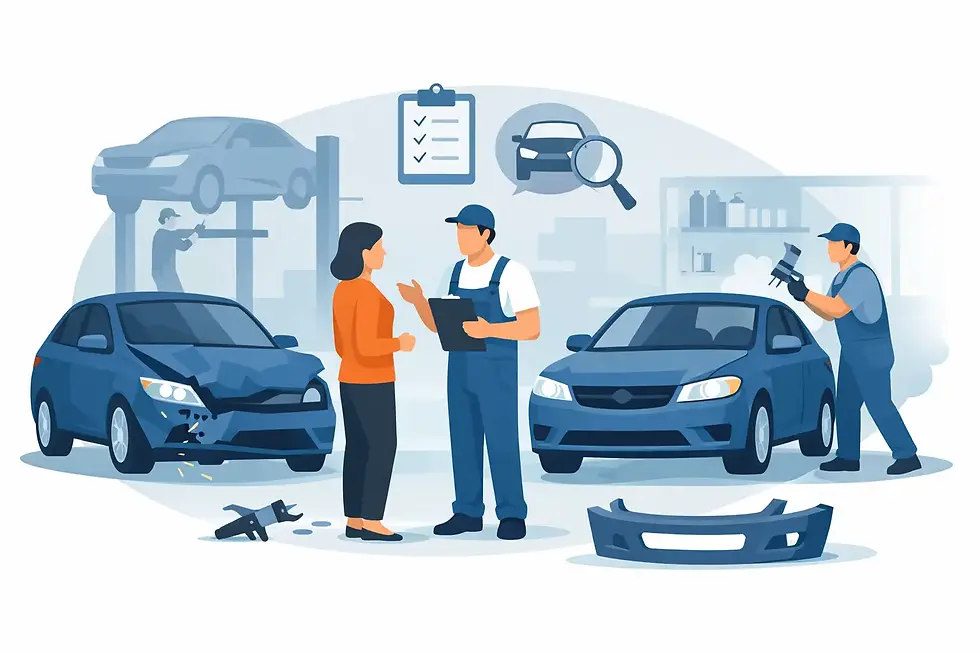
A proper estimate starts with the visible damage, but it should never end there. Scrapes, paint transfer, dents, punctures, and split seams all affect pricing, yet the biggest cost variables are often hidden until the bumper is removed and inspected.
In many cases, the outer bumper cover is only part of the repair. The technician may also need to check absorber foam, reinforcement bars, mounting tabs, retainers, splash shields, undercovers, and adjacent panels. If the impact shifted a fender edge or damaged a headlamp bracket, the estimate changes. If the vehicle has parking sensors or blind spot features in the bumper area, those components may also need testing or calibration.
That is why a quick glance in a parking lot should never be treated as a final number. An accurate estimate is built on teardown, measurement, and parts verification, not guesswork.
Typical price ranges for bumper repairs
A bumper repair cost estimate can vary widely depending on the vehicle, damage severity, and repair method. For light cosmetic damage such as surface scratches, paint transfer, or minor scuffs, the repair may fall on the lower end. Once cracking, distortion, broken clips, or sensor involvement enters the picture, pricing climbs.
As a general range, minor bumper refinishing or localized repair might cost a few hundred dollars. Moderate damage that requires plastic repair, prep, and full repainting can move into the mid-hundreds or higher. A full bumper replacement with paintwork, transfers of trim and sensors, and calibration work can move well beyond that, especially on newer vehicles or luxury models.
Those ranges are useful only as a starting point. The right estimate depends on the construction of your specific vehicle. A compact sedan with a simple painted bumper cover is very different from an SUV with textured trim, integrated sensors, camera systems, and manufacturer-specific parts requirements.
Why two vehicles with similar damage can have very different estimates
This is where many drivers get frustrated. Two rear-end bumps can look almost identical from ten feet away, yet one estimate comes in much higher.
The difference usually comes down to materials, access, technology, and refinishing requirements. Some bumpers can be repaired successfully if the plastic has not stretched or torn too severely. Others need replacement because the damage compromises fit, finish, or mounting integrity. Paint color also matters. Pearl whites, tri-coat finishes, metallics, and adjacent panel blending can significantly affect labor and material costs.
Vehicle design adds another layer. On some cars, removing the bumper is straightforward. On others, disassembly involves wheel liners, lamp assemblies, trim pieces, underbody panels, and sensor harnesses. More labor time means a higher estimate.
Repair or replace - what actually makes sense?
Drivers often assume repair is always cheaper than replacement. Sometimes it is. Sometimes it is not.
If the bumper has light surface damage and the structure underneath is intact, repair is often the most efficient option. Skilled plastic repair and refinishing can restore appearance and fit while controlling cost. But if the bumper has deep tears, missing material, severe distortion, or damaged mounting tabs, replacement may be the better path. Trying to save a damaged bumper at all costs can lead to poor fitment, repeat issues, or a finish that does not hold up.
A disciplined shop will not push one option blindly. It will compare labor, material cost, parts availability, safety considerations, and long-term durability. That is especially important when the bumper supports safety systems or must align precisely with adjacent panels and sensors.
Hidden damage changes the estimate
A bumper can absorb impact in ways that are not obvious from the outside. Once the cover comes off, technicians may find a bent reinforcement bar, crushed energy absorber, broken retainers, or damage to sensor brackets and harnesses.
This is one reason insurance supplements are common on collision work. The original estimate reflects what is visible. The updated estimate reflects what is discovered during teardown. That is not a pricing trick. It is part of repairing the vehicle correctly.
For customers, transparency matters here. You should know what has been found, why it matters, and whether it affects safety, alignment, or system function.
What a professional estimate should include
A real bumper estimate should be itemized and explain the repair path clearly. It should identify whether the bumper will be repaired or replaced, what refinishing is required, and whether related components need inspection or replacement.
It should also account for labor operations beyond paint. That may include remove and install time, disassembly of trim and lights, scans, sensor handling, calibration procedures, and corrosion protection steps where applicable. If adjacent parts are likely to need blending for color consistency, that should be explained upfront.
Certified shops take this process seriously because modern collision repair is tied directly to safety. Repair quality is not just about making the damage disappear visually. It is about restoring the vehicle to proper fit, function, and OEM-minded repair standards.
Insurance, out-of-pocket costs, and timing
If the damage resulted from an accident, your out-of-pocket cost may depend on your deductible and your policy terms. In some cases, insurance will cover the repair after inspection and approval. In others, especially with minor cosmetic damage, drivers may choose to pay directly rather than file a claim.
That decision depends on the size of the repair, your deductible, and whether more damage is likely to appear during teardown. A trustworthy shop will explain the estimate clearly so you can make an informed choice instead of guessing.
Timing also affects the total experience. A simple bumper repair may move quickly if no parts are needed. A replacement can take longer depending on parts sourcing, paint scheduling, and calibration requirements. If a claim is involved, insurer approvals can add another step. Clear communication matters as much as the repair itself.
How to get the most accurate bumper repair cost estimate
Photos can help start the process, but they have limits. They rarely show broken tabs, internal damage, or sensor problems. If you want a meaningful number, the vehicle needs an in-person inspection.
When you bring it in, expect the estimator to check more than the bumper face. They should look at panel gaps, mounting points, nearby lamps and trim, and signs of impact transfer into the structure behind the cover. On late-model vehicles, diagnostic scanning may also be part of the process.
That level of inspection protects you. It helps prevent low initial numbers that rise later because critical steps were ignored. It also helps ensure the repair is done right the first time.
For local drivers, a family-owned certified facility such as Innovation Auto Body Mechanics & Tires brings added value here. The estimate is not just a price sheet. It is a roadmap for restoring the vehicle safely, accurately, and with accountability behind the workmanship.
When a cheap estimate is a red flag
Every driver wants fair pricing. That makes sense. But the lowest bumper estimate is not always the best one.
If a quote seems unusually low, ask what is being left out. Is the shop repairing a bumper that really should be replaced? Are paint materials, sensor checks, or calibration steps excluded? Are they planning to skip proper teardown and write the estimate from a quick exterior look only?
A low number can become expensive if the bumper does not fit correctly, the color match is off, or safety-related components are overlooked. Precision matters, especially on vehicles built with integrated technology and tightly engineered mounting systems.
The right shop will explain the trade-offs honestly. Sometimes there is a budget-conscious repair path. Sometimes there is not. What matters is that you understand the difference before authorizing the work.
If your bumper has been damaged, the best next step is simple - get it inspected before assumptions turn into bigger problems. A careful estimate gives you more than a price. It gives you clarity, and that is where confident repair decisions start.

Comments