.png)

Can a Body Shop Handle an Insurance Claim?
- Jun 22
- 6 min read
After a collision, most drivers are not asking technical questions first. They want to know who is going to deal with the insurance company, how long the repair will take, and whether the vehicle will be restored correctly. That is where the question comes up fast: can body shop handle insurance claim matters on your behalf? In many cases, yes - at least for a significant part of the process. But the answer depends on what you mean by “handle,” what your insurer requires, and whether the shop has the experience to manage both repair quality and claim coordination.
A qualified collision center can often help with estimates, damage documentation, insurer communication, supplement requests, and repair planning. What it cannot do is replace your role as the policyholder. You still approve certain steps, confirm coverage details, and make decisions when the insurer gives options. The best shops make that process easier, not confusing.
Can body shop handle insurance claim steps from start to finish?
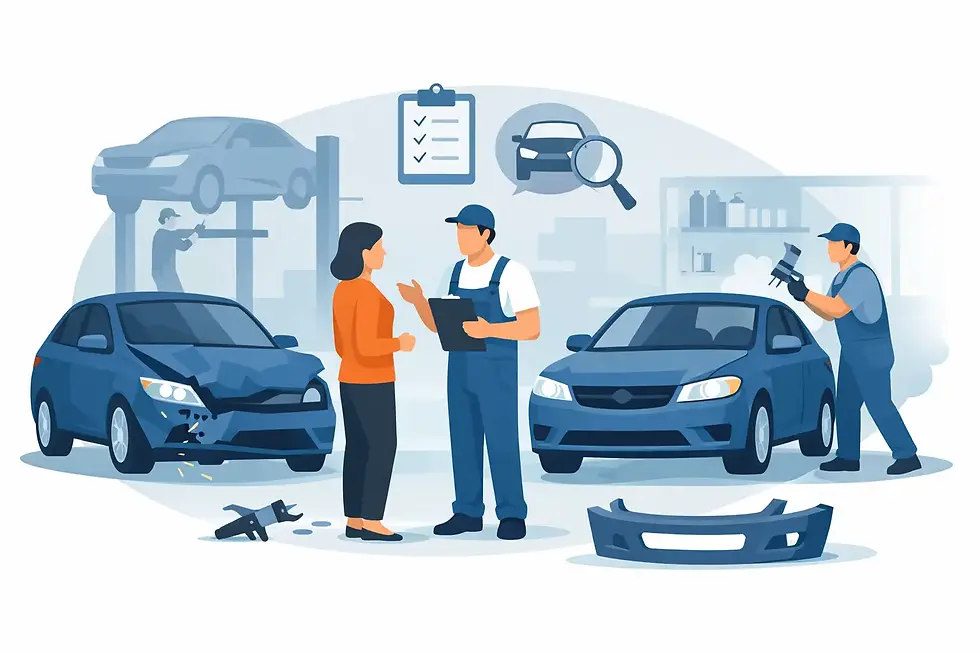
A body shop can handle many of the working parts of an insurance claim, especially once the vehicle is on site for inspection. That usually starts with documenting visible damage, identifying likely structural or mechanical issues, and preparing a repair estimate that reflects proper procedures. If hidden damage is found during teardown, the shop can submit supplements to the insurer so the repair plan stays accurate.
This matters because collision damage is rarely only cosmetic. A bumper impact can involve sensor mounts, reinforcement components, suspension alignment, lighting systems, or frame measurements that are not fully visible on day one. A shop that understands insurance workflows can present those findings clearly and support them with photos, measurements, and manufacturer-based repair logic.
In practical terms, a capable shop may help with:
Initial damage assessment
Estimate preparation
Photo documentation
Communication with the adjuster
Supplemental claim requests
Coordination on approved repairs
Billing the insurer for covered work
That said, there are limits. The shop does not decide your deductible, rental allowance, policy limits, or whether your insurer will approve certain operations without additional review. Those are insurance decisions. The repair facility’s job is to document what the vehicle needs to be repaired safely and correctly.
What a repair shop usually does during the claim process
Once your vehicle arrives, the repair shop typically begins with an inspection and estimate. If the vehicle has heavy damage, that may lead to a more detailed structural teardown. At that point, the shop is not just looking at dented panels. It is evaluating impact energy, underlying bracket damage, alignment conditions, restraint system concerns, and any OEM-related repair requirements.
If insurance is involved, the shop may send the estimate and supporting photos directly to the carrier. Some insurers use app-based photo estimates at the start, but those early numbers are often incomplete. A real in-shop inspection tends to be more accurate because technicians can identify damage behind panels and around mounting points.
As repairs begin, supplements are common. This is not a red flag by itself. It usually means the shop found additional necessary repairs once disassembly exposed the full damage path. A disciplined shop communicates those findings quickly so there is less delay between discovery and approval.
A good collision repair process also includes insurer-facing documentation that is detailed enough to support proper repairs, not just cheap ones. That distinction matters. The goal should be restoring the vehicle to factory parameters where applicable, not simply making it look repaired from ten feet away.
Where your responsibility still matters
Even if a body shop is deeply involved, the insurance claim still belongs to you. You are the policyholder or claimant. That means you may need to authorize repairs, provide claim information, respond to insurer questions, and decide how to proceed if there is a disagreement over coverage or repair scope.
For example, if the insurer proposes aftermarket or recycled parts and you prefer OEM parts where allowed, you may need to review your policy and discuss options. If a repair is delayed because the insurer has not approved a supplement, the shop can press for action, but it cannot force your carrier to move faster.
You may also need to handle rental extensions, deductible payment, and any out-of-pocket upgrades or non-covered work. A trustworthy shop explains this early so there are no surprises when the vehicle is ready.
Why some shops are better at insurance coordination than others
Not every body shop handles claims with the same level of precision. Some write basic estimates and wait. Others actively document repair needs, communicate with adjusters, and protect the integrity of the repair plan. That difference can affect cycle time, parts accuracy, and final repair quality.
The strongest shops combine technical certifications with administrative discipline. They understand structural measurements, refinish procedures, calibrations, restraint systems, and mechanical post-collision checks. They also understand how to present that work in claim language an insurer can process.
This is especially important on modern vehicles. Advanced driver assistance systems, impact sensors, blind spot hardware, and camera-related components can turn a “simple” accident repair into a safety-critical job. If those items are overlooked in the claim stage, the repair may be underwritten around visible damage instead of actual vehicle condition.
A shop with certified technicians and a process built around documentation is more likely to catch those issues before they become a problem.
Can body shop handle insurance claim disputes?
A body shop can help support a dispute, but it usually cannot settle the dispute for you. If the insurer questions labor time, repair method, calibration necessity, or parts pricing, the shop can provide documentation and justification. That may include teardown photos, measurements, scan results, or repair procedure references.
What happens next depends on the carrier and the policy. Sometimes the insurer approves the supplement after review. Sometimes there is negotiation. Sometimes the customer must decide whether to proceed with a partial payment scenario, request escalation, or use another claim avenue if one applies.
This is where experience matters. A shop that has worked through insurance negotiations before can often identify what documentation is missing, what language gets attention, and what repair items should not be skipped. But honesty matters too. No ethical shop should promise that every insurer disagreement will disappear.
How to protect yourself when insurance is involved
The safest approach is to choose the repair shop based on repair capability first, then insurance coordination second. Insurance convenience is helpful, but it should never be the reason you accept lower repair standards.
Ask whether the shop performs full damage documentation, supplement handling, structural measurement when needed, and post-repair inspections. Ask how they communicate during the job and whether they explain insurer approvals versus customer responsibilities. If a shop is vague about process, the claim can get messy quickly.
It also helps to keep your own records. Save your claim number, adjuster contact information, photos of damage, estimate copies, and repair authorizations. A strong shop will carry much of the operational load, but organized customers are better protected when delays or questions come up.
For drivers in Temple Hills and the broader DC area, this is not just about paperwork. It is about making sure your vehicle is repaired to a standard you can trust on the road, in traffic, and in the next emergency stop.
The real answer: yes, but the right shop makes the difference
So, can body shop handle insurance claim work? Yes - many of the most difficult and time-consuming parts can be handled by the shop, especially if it is experienced in insurer coordination and certified collision repair. That includes estimates, documentation, supplements, and communication that helps move the repair forward.
But there is a clear difference between a shop that merely accepts insurance and one that knows how to manage the claim process while protecting repair quality. The second type gives you a better chance of having the vehicle repaired correctly, with fewer administrative headaches and less risk of corners being cut.
At a family-owned facility like Innovation Auto Body Mechanics & Tires, that standard matters. Drivers need more than a paint fix and a phone call to an adjuster. They need a repair process built around precision, transparency, and safety-focused workmanship. If your vehicle has been in an accident, choose a shop that treats insurance coordination as part of the job - but never as a substitute for doing the repair right.

Comments